Yes, geese will eat bird seed if it is available to them, especially when it has spilled on the ground. They are not the pickiest eaters, and anything scattered at lawn level is fair game. That said, bird seed is not something geese seek out the way songbirds do, and a hanging tube feeder is not going to draw them in on its own. The real problem is spilled or scattered seed, open platform feeders, and ground-feeding setups that put food right where geese can reach it.
Will Geese Eat Bird Seed? What to Do If They Visit

Maya Henderson
8 Apr 2026
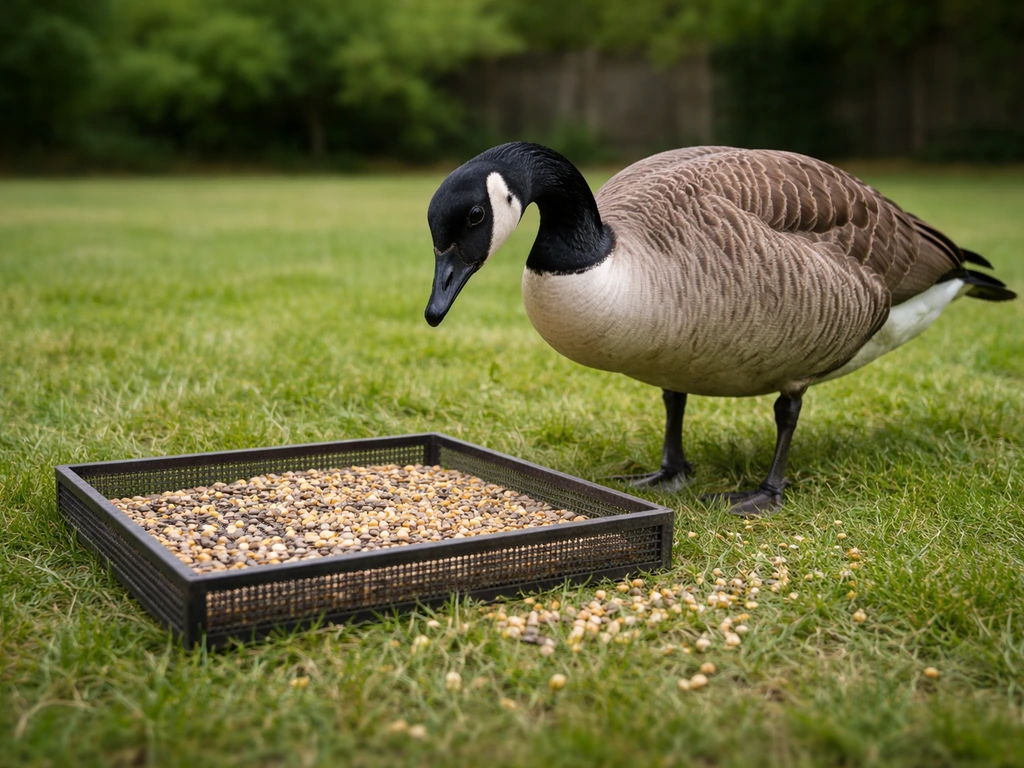
Do geese actually eat bird seed, and how often does it happen?
Geese are primarily grazers. Their wild diet is built around grasses, sedges, aquatic plants, seeds, and berries, which means seeds are already part of what they eat in nature. In urban and suburban areas, Canada geese in particular are well-known for grazing on lawns, and they will opportunistically pick up grain or seed from the ground without hesitation. The Indiana DNR specifically flags overspill from bird feeders as an accidental food source that draws Canada geese into yards, which confirms this is not a rare edge case but a real and documented pattern.
So the likelihood of geese eating bird seed depends almost entirely on how you are feeding. Seed in a hanging feeder at chest height? Geese probably will not bother. Seed scattered on a lawn, dropped on a patio, or sitting in a low tray feeder? That is a different story. Once geese find a reliable food source, they return, and they are not subtle about it.
How Canada geese and wild geese actually behave around feeders
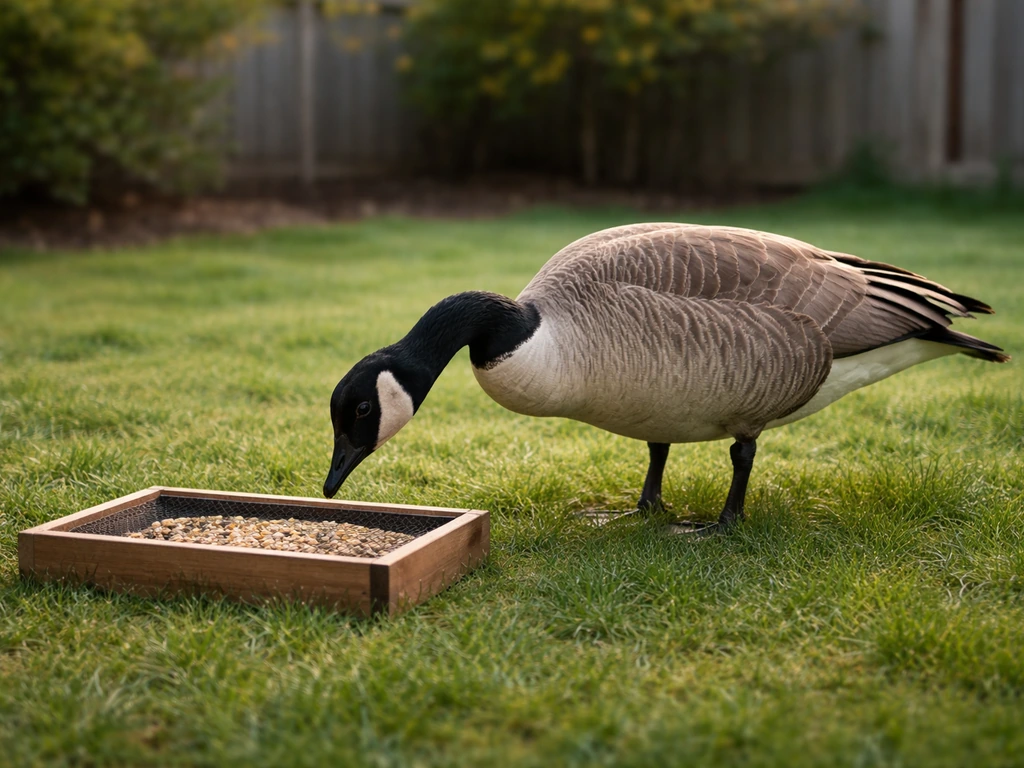
Canada geese are among the most terrestrial waterfowl you will encounter in a backyard setting. Unlike diving or dabbling ducks that feed in water, geese are grazers that spend most of their feeding time walking on land. This makes them far more likely than most waterfowl to wander into a backyard feeding area. A flock that discovers spilled seed will move through the space methodically, picking up whatever is accessible. They do not need a feeder, a pond, or any special setup. A patch of grass with seed on it is enough.
Their behavior around feeders is also tied to their social nature. Canada geese travel and forage in groups, so if one bird finds food, others follow. A single visit can quickly become a regular congregation. In urban parks and suburban neighborhoods, this pattern is extremely common in spring and fall, when flocks are moving through or when resident geese are finishing their molt and ranging more widely for food.
Should you feed geese bird seed or bird food? Here is the honest answer
You should not intentionally feed geese bird seed, and that guidance comes from multiple wildlife agencies, not just a general sense of caution. The USDA APHIS is direct about it: wildlife do not need food from humans, and intentional feeding creates nuisance problems and dependency. MassWildlife echoes that, noting feeding can cause serious health issues in waterfowl, including angel wing deformity, a condition where geese and ducks develop malformed wings from a diet heavy in grain and carbohydrates. It sounds minor, but it leaves birds permanently flightless.
The RSPCA's guidance on Canada geese is even more pointed: do not feed them, full stop. Feeding increases dependence, amplifies aggression especially during nesting season, and actively works against humane management efforts in areas where geese have become a problem. Mass Audubon adds that concentrating waterfowl in small areas through feeding creates environmental and health problems that go well beyond the individual bird you are trying to help. If you are tempted to toss out some seed for geese visiting your yard, the kindest thing you can do is not.
Ducks vs geese: will both eat bird seed, and how can you tell the difference?
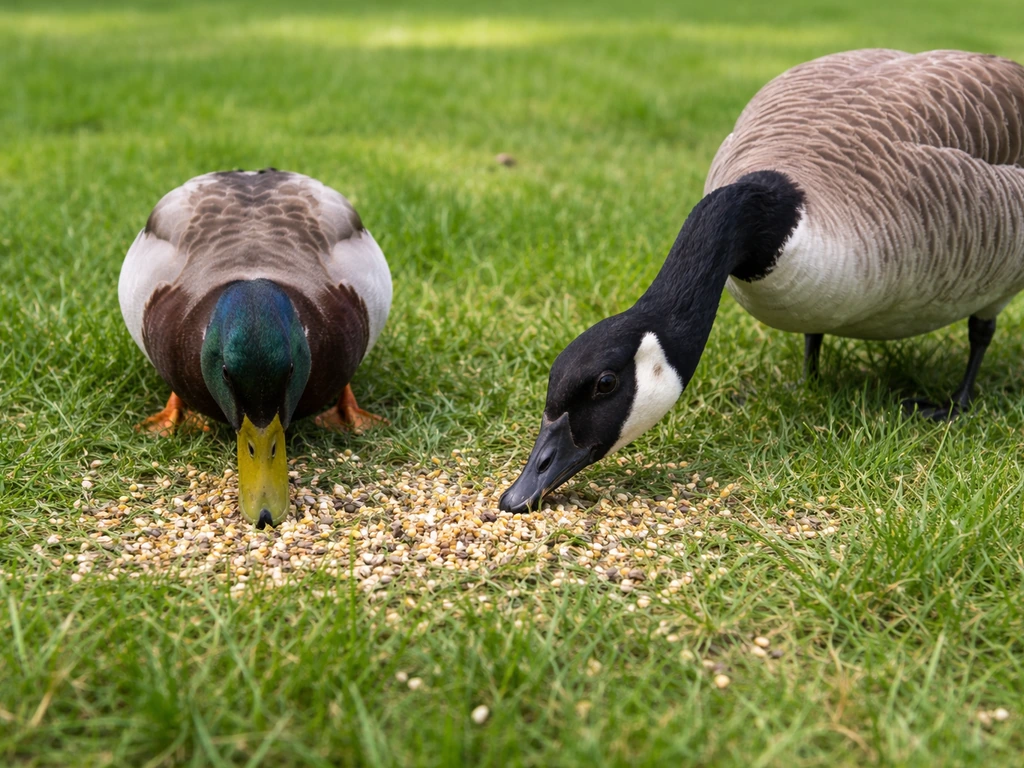
Both ducks and geese will eat bird seed when it is accessible at ground level, but they have different feeding strategies. Geese are terrestrial grazers. They walk on land, pull up grass, and pick through surface-level material. Ducks, by contrast, tend toward dabbling at the water surface or upending in shallow water, though they will also feed on land and pick up seed. If you are seeing waterfowl in your yard going through spilled seed, geese will be the ones systematically moving across the lawn, while ducks are more likely to cluster near a water source or work the edges.
From a practical standpoint, the distinction matters mainly because geese are bigger, produce significantly more waste, and tend to be more assertive about staying once they find a food source. Seagulls eating bird seed is another version of the same issue you face with geese, where a large, opportunistic bird colonizes your feeding area and crowds out the smaller songbirds you actually want to attract. The solution is the same in both cases: remove accessible food at ground level.
Worth noting: if you are seeing both ducks and geese in your yard, your setup is almost certainly providing too much open, ground-level food. Geese usually arrive a step behind ducks in suburban areas, because ducks are slightly more flexible in where they forage. If the ducks showed up first, geese are likely coming.
Which bird seeds are most and least likely to attract geese?
Not all seed types are equally appealing to geese, and knowing which ones pose the biggest risk helps you make smarter choices about what you put in your feeders. The U.S. Fish and Wildlife Service specifically notes that ducks, geese, and quail will eat corn, which makes cracked corn one of the highest-risk options for attracting waterfowl. It is also a very common ingredient in cheaper wild bird mixes, so check your bag's label.
| Seed Type | Geese Interest Level | Notes |
|---|---|---|
| Cracked corn | High | Directly named as a goose/duck food; avoid in ground feeders or mixes |
| White millet | Moderate to high | Small grain geese will pick up easily from the ground; common in mixes |
| Black-oil sunflower | Moderate | Geese will eat it opportunistically if spilled; less actively sought |
| Safflower | Low | Bitter coating deters many birds and wildlife; better choice near waterfowl territory |
| Nyjer (thistle) | Low | Tiny seed, mostly attractive to finches; less of a draw for geese |
| Peanuts (whole or pieces) | Moderate | Geese will take them off the ground; avoid platform feeding with these |
The general rule is: the larger and more grain-like the seed, the more likely geese are to eat it. Corn and millet at ground level are the biggest triggers. Safflower and nyjer are safer choices if you live near water or have waterfowl regularly passing through, because geese are far less interested in them. If you want to understand how other large ground-feeding birds interact with similar seed types, the question of whether turkeys eat bird seed follows almost the same logic, and a lot of the same seed avoidance advice applies there too.
The real risks of geese eating bird seed from your yard
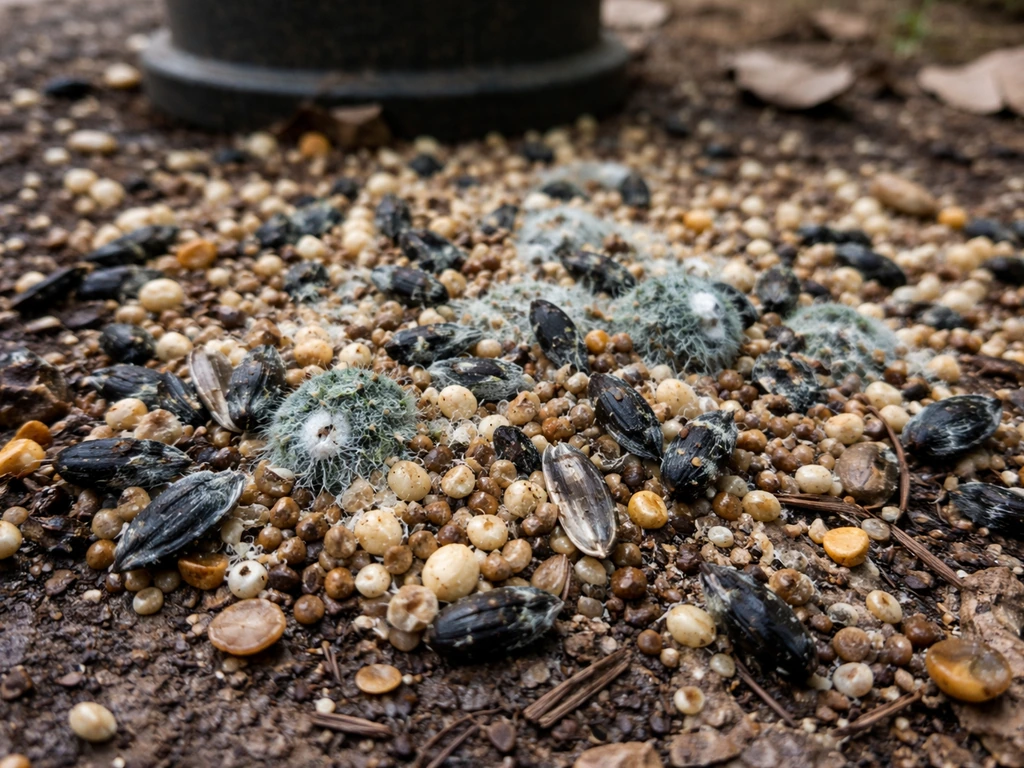
Mold, spoilage, and disease
When geese congregate around a feeding area, they add fecal contamination to an already high-risk zone. Audubon's feeder hygiene guidance is clear that moldy seed, wet hulls, and accumulated feces under feeders can transmit aspergillosis, a respiratory fungal disease, to birds that feed off the ground. Geese make this worse because they produce large quantities of droppings, which mix directly with spilled seed and accelerate spoilage. The Colorado state wildlife guidelines also flag bacterial and parasitic spread through contaminated feces and ground-level feeding as a primary disease vector. What starts as a simple messy situation can become a health hazard for every bird using that space.
Contamination and nuisance problems
Canada geese are prolific waste producers. A single adult goose can produce close to a pound of droppings per day. When a flock establishes a feeding routine in your yard, the contamination on your lawn, patio, or near a water feature becomes significant very quickly. Beyond the mess, the U.S. Fish and Wildlife Service highlights that aggregating birds at feeders accelerates disease spread, and larger birds like geese bring a higher contamination load per individual than songbirds. The NC Wildlife agency specifically cites conjunctivitis spreading through contaminated fecal matter and close contact at feeding stations as one example of the broader disease risk.
Pet safety concerns
If you have dogs or cats that use the yard, a goose-visited feeding area creates real safety issues. Goose droppings carry bacteria including Salmonella, Campylobacter, and E. coli, and dogs in particular will sniff, lick, or roll in contaminated areas. Moldy seed on the ground is also a risk for dogs, as mycotoxins from certain molds are toxic if ingested. Geese themselves can be aggressive toward pets during nesting season, and a territorial Canada goose is not something a small dog should be encountering. Keeping the feeding area clean and inaccessible to geese protects everyone using the yard.
The attraction spiral
One thing that surprises people is how quickly a goose problem compounds. It is not just geese either. Ground-level seed that attracts geese will also pull in other species you may not want. Coyotes are known to eat bird seed and are often drawn in by the same messy ground-level feeding situations that attract waterfowl. You might start with a goose problem and end up with a broader wildlife congregation that is harder to manage. Mass.gov's wildlife guidance makes exactly this point: supplemental feeding intended for songbirds routinely attracts non-target wildlife and creates escalating conflicts.
What to do today: deter geese and set up smarter feeding
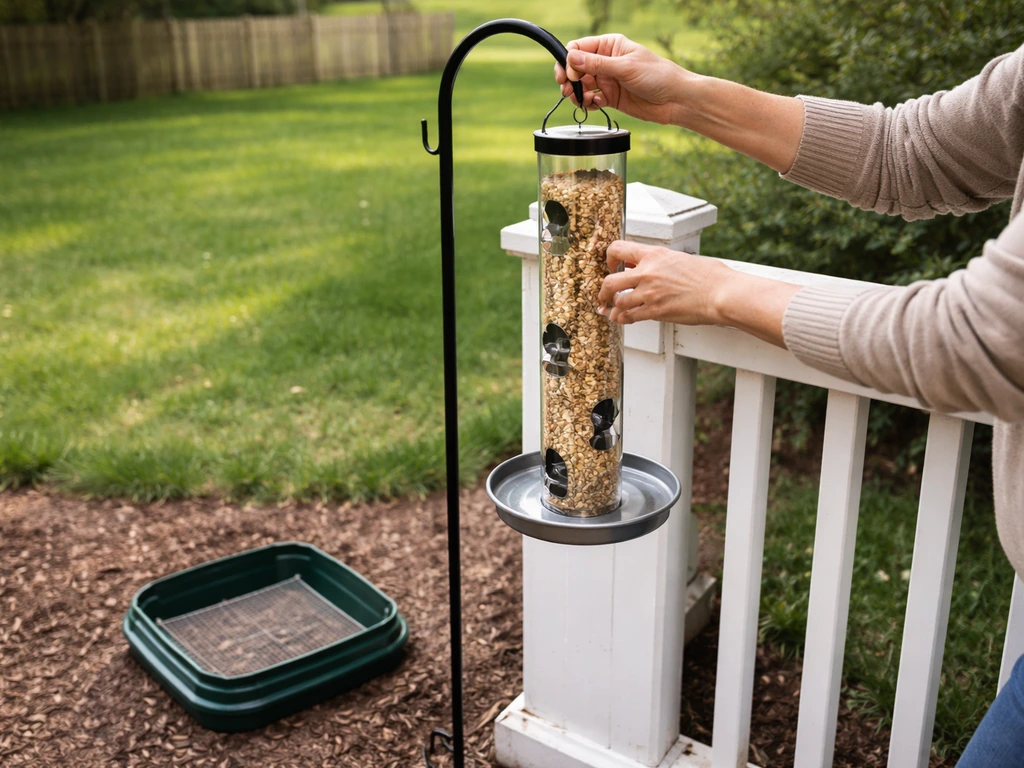
If geese are already showing up, the priority is cutting off their food access immediately. Mass.gov wildlife guidance says to bring in feeders right away when you notice wildlife other than songbirds using them. That is good immediate advice, but you can also modify your setup rather than stopping feeding entirely. Here is what actually works:
- Switch to a hanging tube feeder or a feeder with a catch tray that limits spillage. Geese cannot use hanging feeders and will lose interest without ground-level access.
- Rake and discard spilled seed, hulls, and droppings from under the feeder daily. Audubon recommends removing wet, moldy, and spoiled material before it accumulates and spreads disease.
- Replace cracked corn and millet in your mixes with safflower or nyjer seed, which geese are much less interested in.
- Use a physical barrier. Indiana DNR specifically mentions fencing as a tool to prevent geese from walking into feeding areas. A simple low fence or decorative border plants can interrupt their grazing path.
- Remove any standing water dishes or shallow trays that double as water sources, since waterfowl are drawn to water near food.
- If you see sick birds at your feeder, take it down immediately and keep it down for one to two weeks before cleaning and refilling with fresh seed.
- Do not feed geese directly, even once. The RSPCA is explicit that a single feeding event reinforces their return behavior.
For persistent goose problems that go beyond the feeder, the RSPCA recommends non-food deterrents like visual scarers, though these have to be moved regularly to stay effective. Habitat modification also helps. Canada geese prefer open lawn near water because it gives them visibility and an escape route. Planting taller border vegetation along the edges of your yard removes their preferred sightlines and makes the space less appealing. The goal is not to harm them but to make your yard a less obvious and less rewarding stop.
For the birds you actually want to attract, the same cleanliness rules that keep geese away also make your feeder healthier and more appealing to songbirds. Clean feeders every one to two weeks with a diluted bleach solution, let them dry completely before refilling, and keep the ground underneath raked. Pigeons around bird feeders can create a similar mess-and-contamination dynamic if seed is spilling at ground level, so those same cleanup habits address multiple problem visitors at once. A tighter, cleaner setup almost always results in fewer unwanted visitors and healthier birds all around.
FAQ
If my tube feeder is hanging, will geese still eat the seed that falls under it?
Yes. Geese are unlikely to reach seed at chest height, but they often patrol the ground for overspill. If you see droppings or tracks near the base, treat the spilled seed as the real attraction and clean the area daily for the first week.
How can I tell whether geese are eating the seed versus grazing on my lawn?
Look for feeding signatures. Geese that are targeting spilled seed tend to move in a loose line across the exact feeder footprint and repeatedly pick at the same patch. If they ignore the feeder area but clip grass elsewhere, the issue is your lawn habitat, not the bird feeder.
What is the best way to reduce geese quickly if they already started visiting?
Stop the easy food access immediately: remove low or open trays, clear spilled seed, and bring feeders inside or at least elevate and secure them. If you cannot remove them, use a catch tray with frequent emptying so seed does not build up on the ground.
Should I switch to a different seed to keep geese away?
Often, yes. Avoid cracked corn and millet, since they are highly attractive to geese at ground level. Many people have better results with safflower or nyjer, but you still must prevent overspill because any seed type becomes attractive once it is accessible at lawn height.
Will feeding songbirds with sunflower hearts attract geese too?
It can. Sunflower is less corn-like than cracked corn, but if it spills or is offered in a ground-level or open platform feeder, geese will still take it. Use covered feeding and clean up any fallen pieces promptly.
How often should I clean under my feeders to prevent geese and disease risk?
More often than most people think. For a problem-yard, clear the ground under feeders daily for a short period, then at least every few days. Even if you clean the feeder, wet hulls, moldy seed, and droppings under it can accumulate quickly.
Can I use deterrents like flags or pinwheels, and will geese get used to them?
They can. Visual deterrents often lose effectiveness unless you move or rotate them regularly. Also avoid relying on only one device, because geese are persistent and learn patterns when food remains accessible.
Is it safe to let pets roam where geese have been around my bird feeder?
Be cautious. Goose droppings can carry bacteria, and dogs in particular may lick or roll in contaminated areas. If geese are visiting, keep pets off the lawn near the feeder until you have cleaned and sanitized the area.
What if I want to keep feeding birds, but geese keep showing up anyway?
Redesign the setup rather than quitting. Use enclosed or elevated feeders that reduce ground spill, avoid ground-feeding stations, and remove overspill with raking or vacuuming. If geese still persist, prioritize habitat changes like denser border vegetation to remove their clear sightlines.
Will geese return after I clean up and change the feeder setup?
Sometimes they test the area again within days, especially if they are part of a local flock. Consistent cleanup and quick removal of any new fallen seed matter more than one-time actions.
Do ducks and geese respond differently to the same cleanup steps?
Yes, but the principle is the same. Ducks may show up near water, while geese are drawn by accessible ground seed, so geese are usually the stronger signal that overspill is the problem. Cleaning under feeders helps both groups by reducing ground contamination and spoiled seed.
Next Articles
Can Turtles Eat Bird Seed? Risks and Safer Backyard Tips
Find out if turtles can eat bird seed, risks from mold and additives, and safer ways to stop exposure at feeders.
Can Fledglings Eat Bird Seed? What to Feed Instead
Can fledglings eat bird seed? Get safe options, what to avoid, and step-by-step care when you find one.
Can Hamsters Eat Bird Seed Safely? Risks and What to Do
Yes or no on hamsters eating bird seed, plus risks from fat, hulls, and mold, and what to do if it happens.