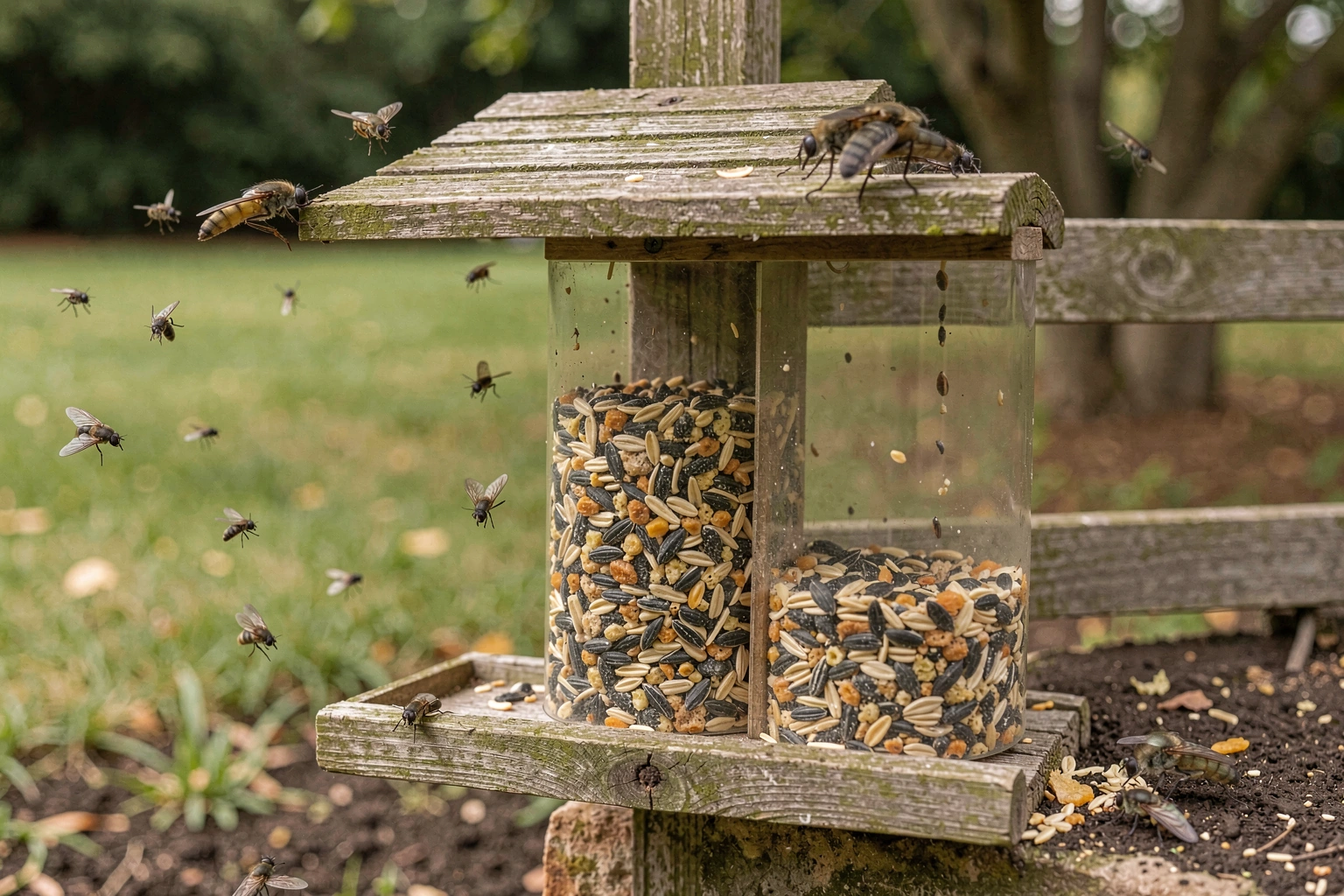
Bees are attracted to bird seed primarily because the area around a feeder becomes a source of sugar, moisture, and fermentation that mimics the food signals bees are wired to find. The fastest fix is to keep seed clean and dry, switch to a closed or ported feeder, move the feeder away from flowering plants and entry points, and add a separate water source nearby to give bees something else to visit.
Why Bees Show Up at Your Feeder in the First Place
Bees are not actually interested in the seed itself. Dry sunflower seeds or millet hold no appeal for them. What draws bees is what happens around the seed over time. When seed gets wet, it begins to ferment. That fermentation releases sugary compounds and yeasty odors that are genuinely attractive to foraging bees, especially honey bees. Spilled seed on a tray or the ground can also develop a sticky, sugary residue as it breaks down, and that residue is exactly the kind of signal a foraging bee is looking for.
Moisture is the main trigger. A feeder that stays dry and clean is far less interesting to bees than one with damp, clumped seed sitting in a tray. If your feeder has a wide open tray that collects rain or morning dew, you are essentially running a slow fermentation station that broadcasts a food signal to every bee in the neighborhood.
Proximity to flowering plants matters too. If your feeder is hanging near a rose bush, lavender bed, or fruit tree, bees are already working that area. The feeder just becomes part of their patrol route. They investigate it because they are already close, and if they find anything sugary, they recruit more bees.
Bees, Wasps, or Something Else?
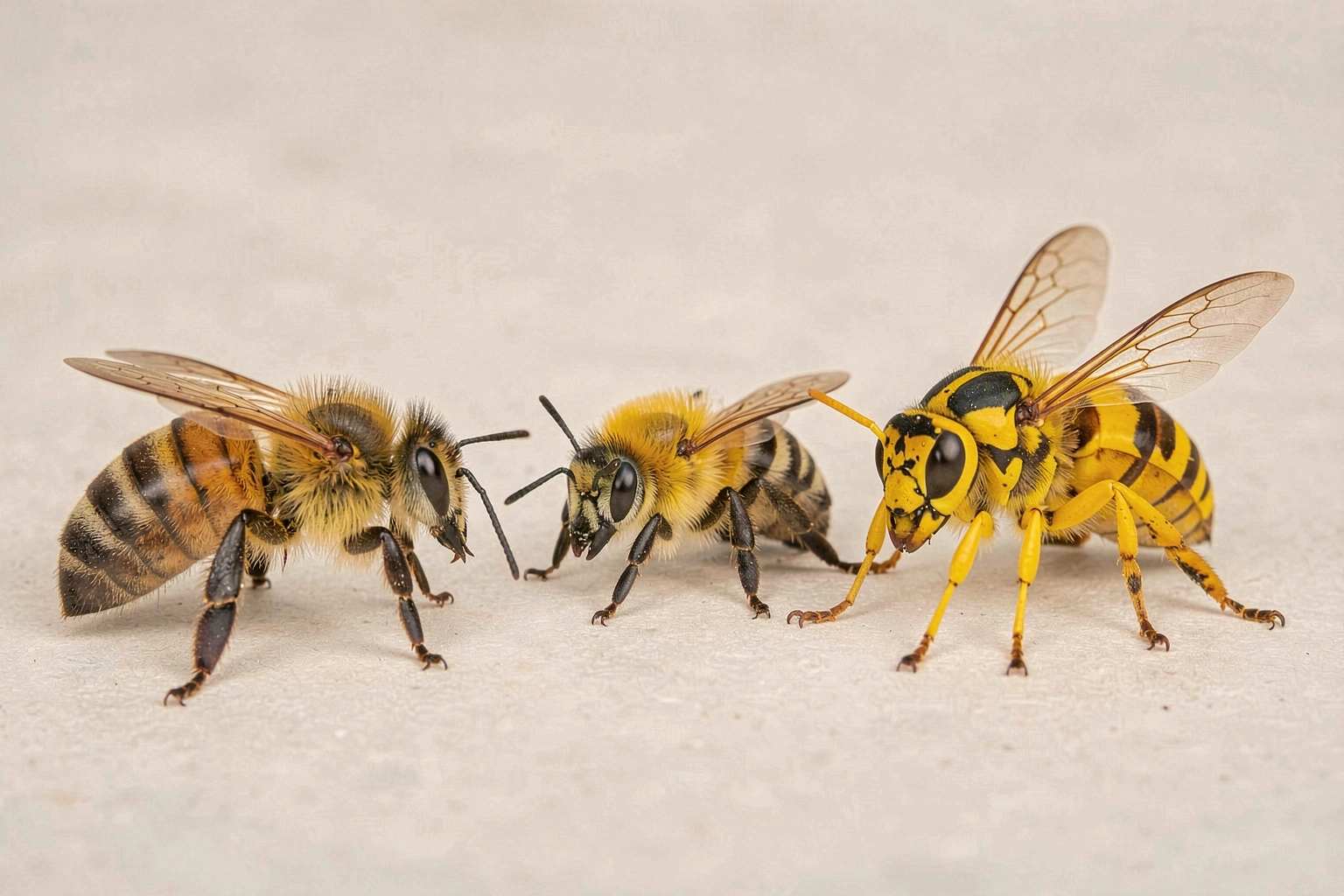
Before you change anything, it helps to know what you are actually dealing with. Honey bees are fuzzy, golden-brown, and move in a calm, methodical way. They are the ones most likely to be drawn to sugary residues. Bumble bees are larger and rounder, and while they do forage near feeders, they are less likely to cluster around seed. Mason bees and carpenter bees tend to be solitary and are rarely a feeder problem.
Wasps are a different story. Yellow jackets and paper wasps are sleeker, shinier, and more aggressive than bees. They are also attracted to protein and sugar, which means spilled seed and bird droppings can draw them in. If the insects around your feeder are aggressive, hovering in a threatening way, or building a papery nest nearby, you are probably dealing with wasps, not bees. The management approach is similar, but the urgency is higher with wasps, especially if you have kids or pets around.
Flies are also common around feeders and are sometimes mistaken for bees. If the insects are small, fast-moving, and not fuzzy, they are likely flies attracted to decomposing seed or bird waste.
Signs the Problem Is Getting Worse
A few bees investigating a feeder is normal and usually not worth stressing over. The situation becomes a real problem when you see a cluster of bees that does not disperse after a few hours, when bees are actively crawling into the seed ports or tray, or when you notice a steady stream of bees flying in from a consistent direction. That last sign, a flight line, can indicate a nearby hive using your feeder as a regular foraging stop.
If you find a cluster of bees hanging together in a ball shape on or near your feeder, that is a swarm. Swarms are generally not aggressive, but they do mean a colony is looking for a new home. Do not disturb them. Contact a local beekeeper or extension service, and they will often relocate the swarm for free.
What to Do Right Now (The 60-Second Check)
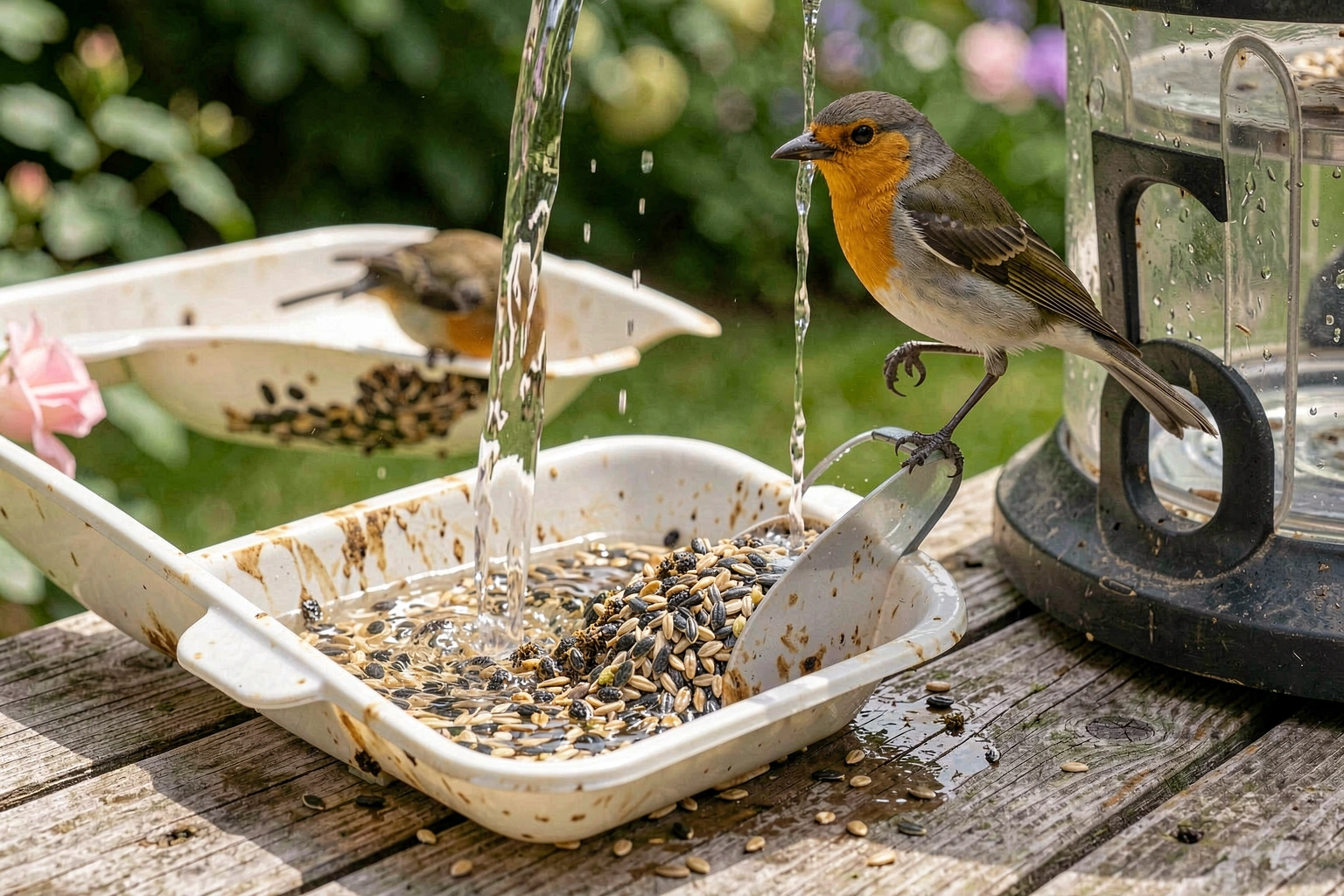
Before anything else, do a quick assessment of your current setup. Pull the feeder down and look at the tray and ports. Is there wet, clumped, or discolored seed? Does it smell sour or yeasty? If yes, that fermented seed is your main problem. Dump it, rinse the feeder with warm water, and let it dry completely before refilling.
While the feeder is down, sweep up any spilled seed on the ground or deck beneath it. Old seed on the ground is a slow-release sugar source that keeps bees coming back even after you clean the feeder itself. A quick sweep takes two minutes and makes a noticeable difference.
Refill with fresh, dry seed and get the feeder back up in a slightly different spot if possible, ideally at least ten feet away from where it was. Bees that were visiting the old location will check back, find nothing, and move on within a day or two.
The Feeder Setup That Minimizes Bee Access
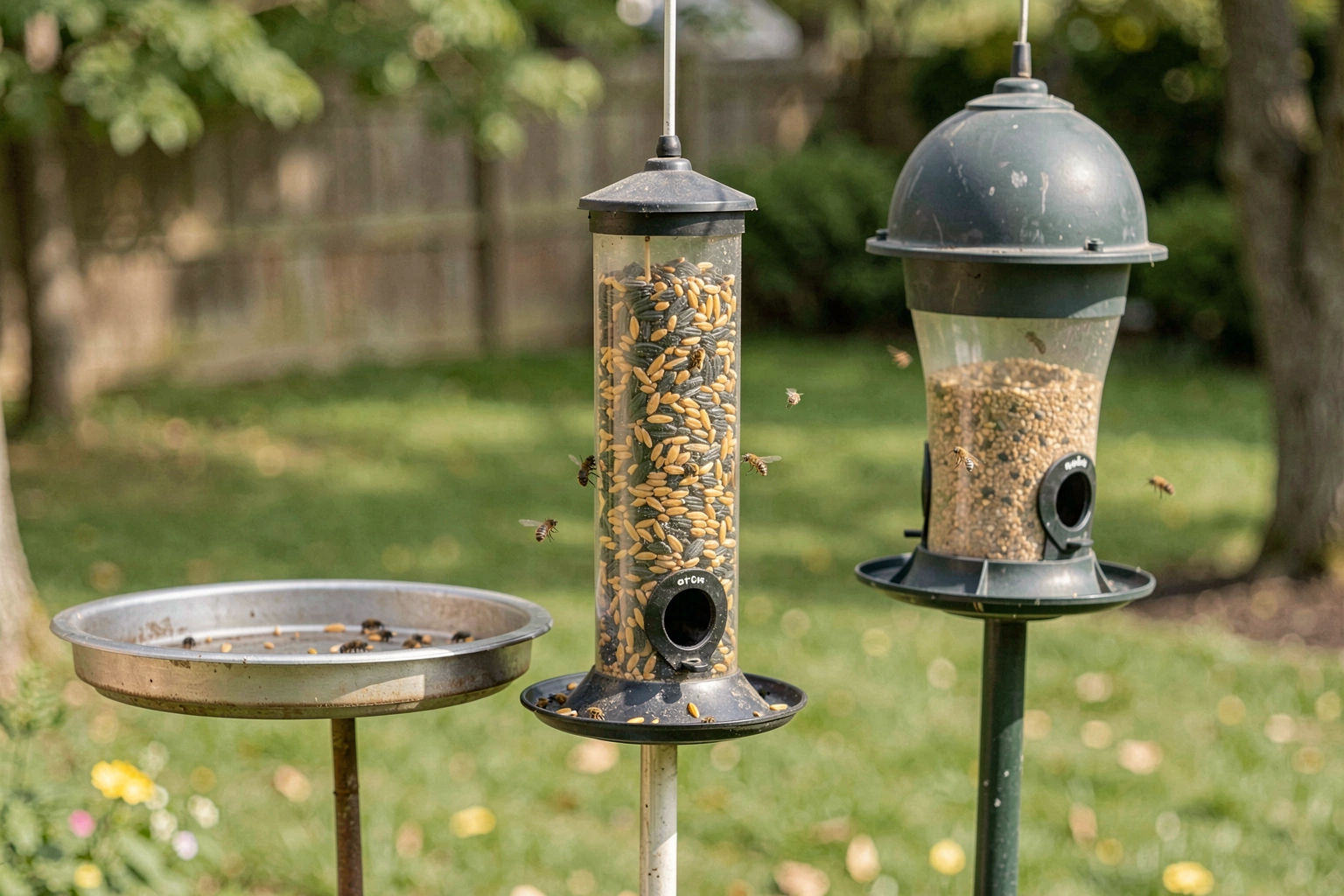
Feeder design is one of the most effective long-term fixes. Open platform feeders and wide tray feeders are the worst offenders because they expose seed to rain, collect debris, and give bees easy access. Closed tube feeders with small ports are much better because they limit how much seed is exposed at any time and drain more easily.
The best setup for reducing bee activity without sacrificing bird variety is a tube or hopper feeder with a built-in baffle or dome cover. The dome keeps rain off the seed, which prevents the fermentation that attracts bees in the first place. Some feeders also have bee guards on the ports, which are small plastic mesh inserts that block bee access while still letting birds reach the seed.
Mount the feeder on a pole rather than hanging it from a tree branch near flowering plants. A pole mount in an open area of the yard, away from garden beds and fruit trees, puts the feeder in a less bee-trafficked zone. Aim for at least fifteen feet from any flowering plants and at least ten feet from doors, windows, or outdoor seating areas.
Feeder Styles Side by Side
Here is a quick comparison of the three most common feeder types and how they stack up for bee attraction, bird compatibility, and maintenance.
| Feeder Style | Bee Attraction Risk | Bird Compatibility | Maintenance Needs |
|---|---|---|---|
| Open platform / tray | High (collects moisture, exposes seed) | Very high (many species) | Daily cleaning needed in wet weather |
| Tube feeder with ports | Low to medium (limited seed exposure) | Medium (finches, chickadees, sparrows) | Weekly cleaning, easy to dry |
| Hopper feeder with dome cover | Low (dome blocks rain, reduces fermentation) | High (most seed-eating birds) | Bi-weekly cleaning, good drainage |
If you are choosing between these, the hopper with a dome cover is the best all-around option for most backyards. It keeps seed dry, limits bee access, and attracts a wide range of birds. Tube feeders are a close second and are especially good if you want to target specific species like finches. Open platform feeders are great for bird variety but require daily attention to stay clean and dry, which most people do not realistically do.
Seed Type Makes a Difference Too
Not all seed mixes are equally attractive to bees. Mixes that contain dried fruit, sugar-coated seeds, or corn can be more appealing to bees and wasps than plain seed. Straight black oil sunflower seed, safflower, or nyjer (thistle) seed are less likely to produce the sugary residues that attract bees, and they are also excellent choices for attracting a wide range of songbirds.
Avoid mixes with fillers like milo or red millet if bees are a persistent problem. Birds tend to toss those seeds out of the feeder anyway, which means more spilled seed on the ground and more fermentation happening below the feeder.
Give Bees Something Better to Do
One of the most effective and underrated fixes is giving bees an alternative. Bees visit feeders partly because they are foraging and investigating anything that might be a food source. If you set up a shallow dish of plain water with a few pebbles or marbles in it (so bees can land without drowning), place it about twenty feet away from the feeder, and bees will often prefer that over investigating the seed area.
This works especially well in hot, dry weather when bees are actively searching for water. A dedicated bee water station redirects their attention without harming them or disrupting your bird feeding setup.
If you have flowering plants near the feeder, consider moving the feeder rather than removing the plants. Bees belong in your garden. The goal is just to separate the bee zone from the bird zone as much as your yard allows.
A Simple Week-by-Week Plan
Today, clean the feeder, dump any wet or clumped seed, sweep up spills, and move the feeder at least ten feet from its current spot. Set up a shallow water dish for bees about twenty feet away.
This week, check the feeder daily for moisture and spills. If rain is in the forecast, consider bringing the feeder in or covering it temporarily. Refill only with dry seed and only as much as birds will eat in a day or two to reduce the chance of seed sitting long enough to ferment.
This season, consider upgrading to a hopper feeder with a dome cover if you are using an open tray. Evaluate where your feeder is positioned relative to flowering plants and garden beds, and adjust placement if bees are still showing up regularly. If you notice a consistent flight line of bees coming from one direction, look for a hive or nest in that area.
When to Call for Help
Most bee situations around a bird feeder are manageable on your own with the steps above. But there are a few cases where you should bring in a professional.
If you find an established hive in or near a structure, like inside a wall, under a deck, or in a shed, do not attempt to remove it yourself. Contact a local beekeeper first. Many beekeepers will remove honey bee colonies for free or at low cost because they want the bees. If the colony is in a difficult location or poses a safety risk, a licensed pest management professional with experience in bee removal is the right call.
If anyone in your household has a bee sting allergy, treat any significant bee activity near the home as a higher-priority situation. Keep an epinephrine auto-injector accessible and do not wait to see if the problem resolves on its own.
For general guidance on bee identification and safe management in your region, your local cooperative extension service is one of the best free resources available. They can help you identify the species, assess the risk, and connect you with local beekeepers or removal services if needed.
The One Thing That Makes the Biggest Difference
If you only do one thing after reading this, make it this: keep your seed dry. Wet, fermenting seed is the single biggest driver of bee activity around bird feeders. A clean, dry feeder in a reasonable location will rarely attract more than a passing bee or two. Everything else, feeder design, placement, water stations, seed type, is just reinforcing that one core principle.
Bees are not the enemy here. They are doing exactly what they are supposed to do, which is find food. Your job is just to make sure your bird feeder is not accidentally advertising itself as a snack bar.