Yes, bird seed attracts mice. It is one of the most reliable and overlooked food sources that draws rodents close to homes, especially when seed spills onto the ground or gets stored in containers mice can chew through. The good news is that a few targeted changes to how you store seed, design your feeder setup, and maintain the area around it can make a real difference, often within a week.
Does Bird Seed Attract Mice? How to Stop It
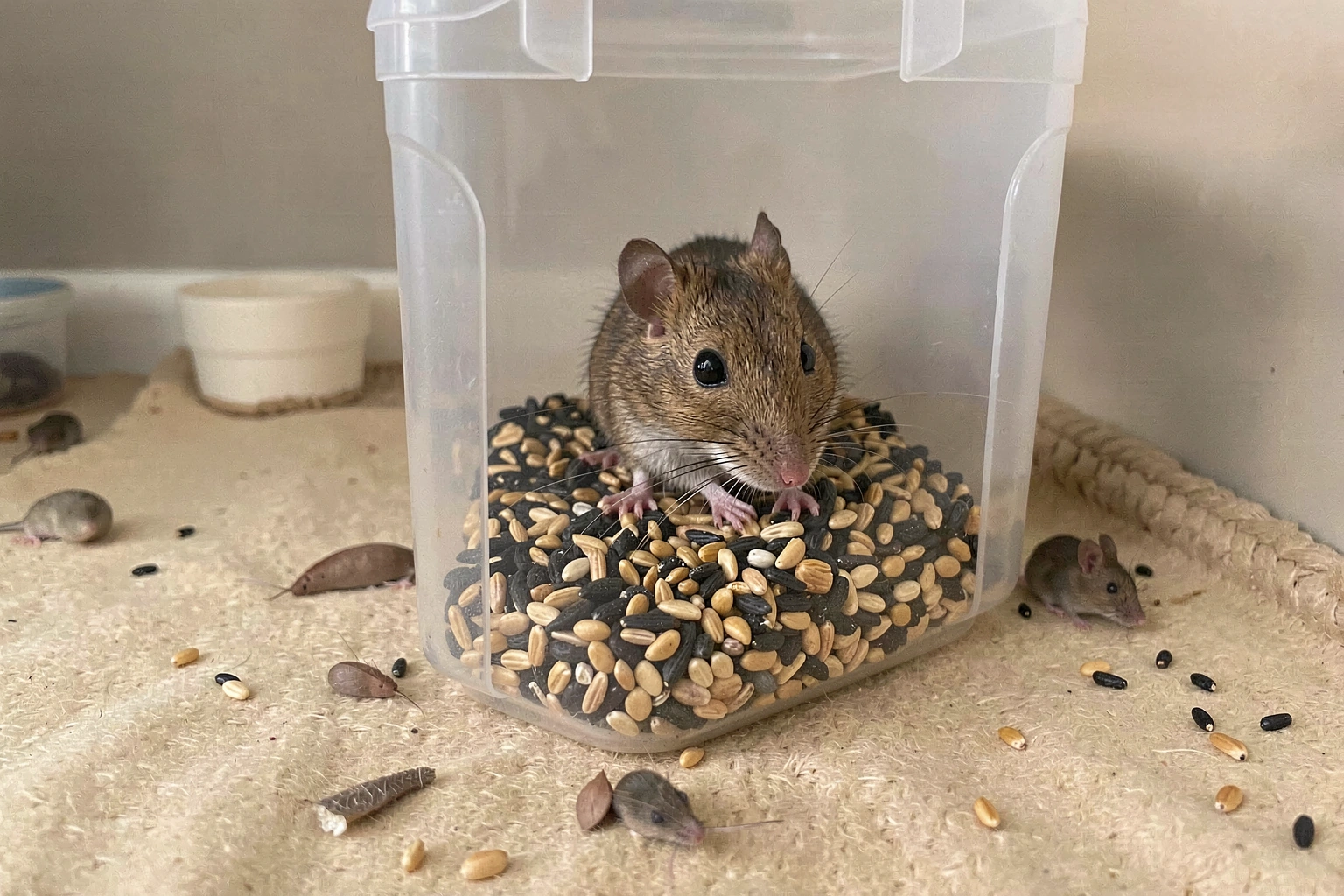
Why bird seed pulls mice in
Mice are opportunistic foragers. They are not picky, but they are smart about energy, and a bird feeder offers exactly what they want: a dense, calorie-rich food source that replenishes itself regularly. Millet, sunflower seeds, cracked corn, and mixed seed blends are all highly attractive to rodents. When seed falls to the ground under a feeder, it creates an open buffet at ground level, which is exactly where mice spend most of their time.
The problem compounds quickly. Mice are creatures of habit and will return to a reliable food source night after night. Once they find your feeder area, they start exploring nearby structures for shelter. A garage, a shed, a crawl space, or a gap in your foundation becomes the next logical stop. That is how a feeder problem becomes a house problem. It does not always happen, but the risk is real, especially in fall and winter when mice are actively seeking warmth and food.
Stored seed is the other major entry point. A bag of bird seed left in a garage, shed, or on a porch is essentially a mouse magnet. Standard paper or thin plastic bags offer almost no resistance to rodent teeth. Mice can chew through them in minutes, and once they find the stash, they will nest nearby. This is often how mice end up inside the home even when the feeder itself is positioned well.
Some seeds are riskier than others
Not all bird seed carries the same risk. The table below summarizes common seed types, their spillage tendency, rodent attractiveness, and which birds they serve best.
| Seed Type | Spillage Risk | Rodent Attractiveness | Good For |
|---|---|---|---|
| Mixed blends (millet, milo, cracked corn) | High | High | Wide variety of birds |
| Black oil sunflower | Medium | High | Chickadees, finches, cardinals |
| Safflower | Low | Low | Cardinals, chickadees |
| Nyjer (thistle) | Low | Low | Finches |
If you want to reduce ground spillage without giving up on feeding birds, consider switching to single-ingredient seeds that match the birds you actually want to attract. Neither safflower nor nyjer is a perfect solution, but they reduce the volume of wasted seed hitting the ground.
The situations that make things worse
A few specific conditions dramatically increase the chance that your feeder will attract mice and keep them around. Knowing which ones apply to your setup helps you prioritize where to focus first.
| Risk Factor | Why It Matters |
|---|---|
| Seed in paper bags, thin plastic, or open buckets | Mice smell seed through packaging and chew through soft materials quickly |
| Feeder within 10 feet of the house or foundation | Short travel distance makes indoor exploration more likely |
| Dense shrubs, brush piles, or debris near the feeder | Provides sheltered pathways and nesting spots next to the food source |
| Seed left on the ground overnight | Mice are nocturnal; ground seed at dusk is a nightly invitation |
| Feeders without trays or with wide open platforms | Seed scatters freely with no containment |
| Heavy winter feeding without adjusting amounts | Constantly full feeders keep mice returning when they are most motivated |
Your 7-day action plan to stop attracting mice
You do not need to overhaul everything at once. Here is a practical sequence that addresses the highest-risk issues first and builds toward a setup that is much harder for mice to exploit. Each step takes less than an hour.
| Day | Action | What to Do |
|---|---|---|
| 1 | Remove spilled seed and secure storage | Sweep or vacuum all ground seed; transfer seed from paper or thin plastic bags into a metal or heavy-duty rigid plastic container with a locking lid |
| 2 | Inspect feeder and add a seed tray | Check ports, tray, and base for gaps causing spillage; add a seed-catching tray beneath the feeder; clean under the feeder again |
| 3 | Relocate feeder | Move feeder to at least 10 to 20 feet from the house, garage, or any attached structure; position on a pole in an open area with less rodent cover |
| 4 | Deep clean the feeder | Remove old seed; scrub with a stiff brush and diluted bleach solution (1 part bleach to 9 parts water); rinse thoroughly and let dry before refilling |
| 5 | Add a baffle and clear nearby cover | Install a pole-mounted baffle; remove brush piles, debris, or stacked materials within 10 to 15 feet of the feeder |
| 6 | Monitor and reduce overnight seed | Walk the area at dusk and morning; look for droppings, gnaw marks, and disturbed seed; adjust fill amount so the feeder is mostly empty by nightfall |
| 7 | Set your ongoing maintenance routine | Establish a daily sweep, weekly feeder cleaning, and monthly storage check; seek professional help if signs of mice persist |
Choosing the right storage and feeder setup
The two biggest leverage points in any mouse-prevention setup are how you store seed and what kind of feeder you use. Getting both right removes most of the risk.
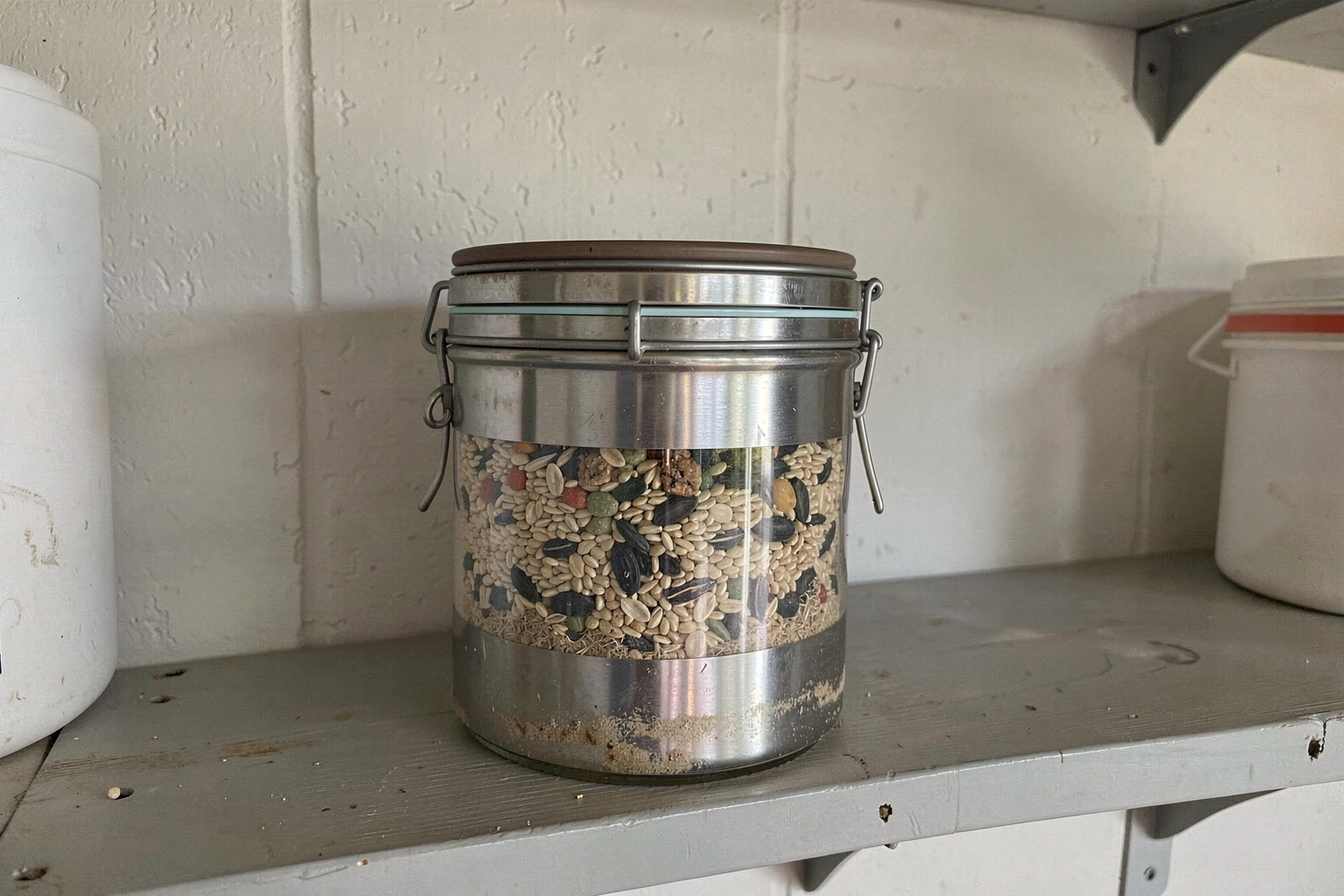
Storage that mice cannot get into
| Storage Option | Mouse Resistance | Notes |
|---|---|---|
| Galvanized steel container with locking lid | Excellent | Gold standard; mice cannot chew through metal |
| Heavy-duty rigid plastic bin with secure lid | Good | Thick walls required; mice can chew thinner plastic over time |
| Paper bag | Poor | Mice chew through in minutes |
| Thin plastic bag | Poor | Offers almost no resistance |
| Open bucket | Poor | No barrier to access at all |
Avoid storing seed in garages or sheds that have any gaps at the foundation or around doors, since mice can squeeze through openings as small as a dime. If you must store seed indoors, keep it in a sealed metal container away from walls. Buy seed in quantities you will use within two to four weeks to minimize the size of the attractant and keep seed fresh for birds.
Feeder types and what to look for
| Feeder Type | Spillage Level | Mouse Risk | Approximate Cost | Notes |
|---|---|---|---|---|
| Tube feeder with small ports | Low | Low | $15 to $40 | Best for reducing spillage; add a seed tray for further control |
| Tube feeder with seed tray | Low | Low | $20 to $50 | Catches falling seed before it hits the ground |
| Weight-sensitive feeder | Low | Low | $40 to $80 | Closes ports for heavier animals; reduces waste and spillage |
| Hopper feeder | Medium | Medium | $20 to $60 | Attracts variety of birds; more maintenance needed |
| Open platform feeder | High | High | $10 to $30 | Most spillage; requires daily tray cleaning and a pole baffle |
If you love platform feeders and do not want to give them up, position them at least five feet off the ground, add a pole baffle below, and clean the tray daily. The tradeoff is more maintenance, but it is manageable if you are consistent.
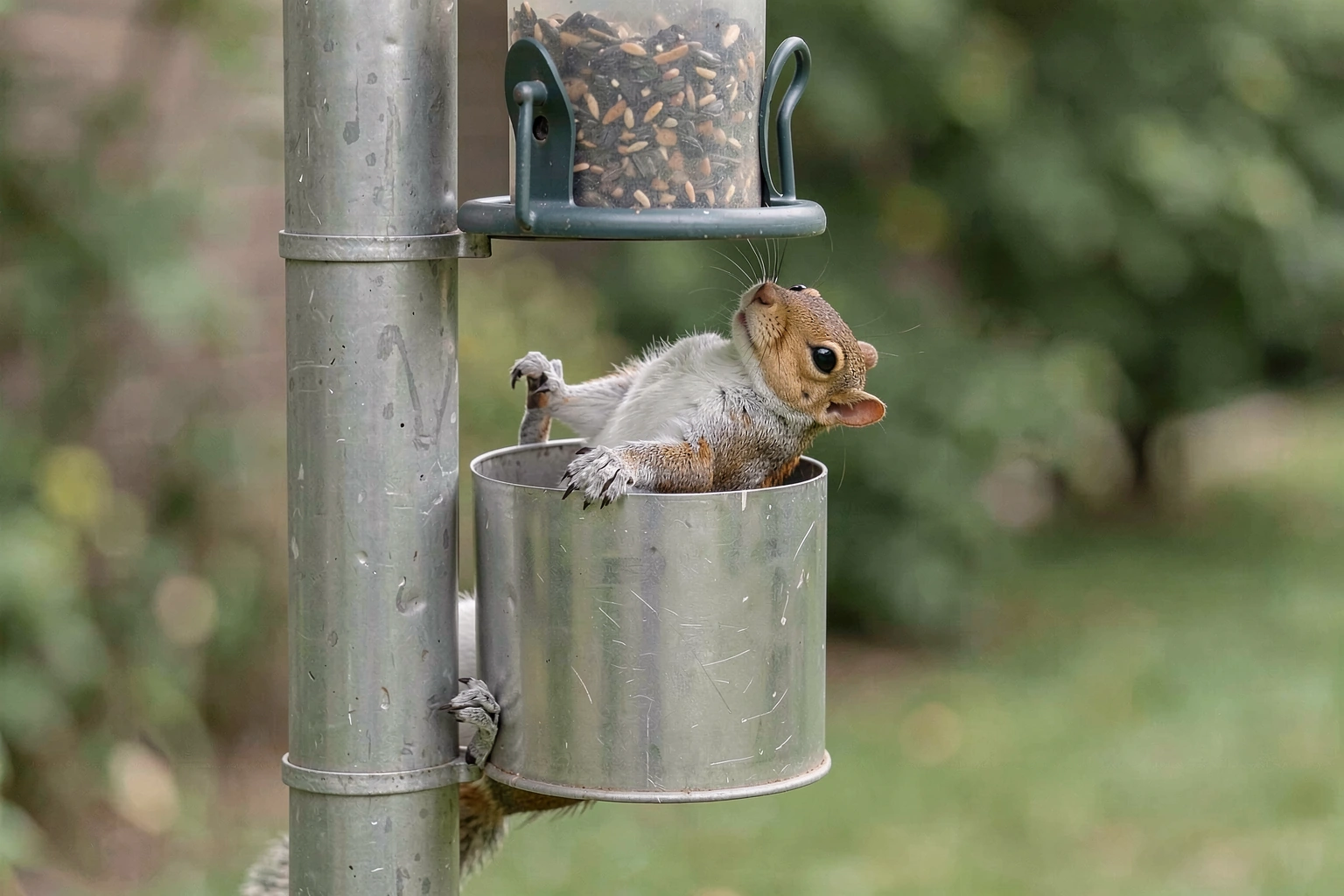
Baffles, guards, and placement
A pole-mounted baffle is one of the most effective and underused tools in a bird feeder setup. It sits on the pole below the feeder and prevents rodents (and squirrels) from climbing up. Dome baffles that hang above the feeder also help by blocking access from above and keeping seed dry. For the baffle to work, the feeder needs to be positioned so that mice cannot jump onto it from a nearby fence, tree branch, or structure. A general rule is to keep the feeder at least 10 feet away from anything a mouse could launch from.
Winter feeding and why the risk goes up
If you feed birds year-round, winter is when you need to be most careful. Mice are actively seeking food and warmth from late fall through early spring, and a well-stocked feeder is exactly what they are looking for. At the same time, many people fill feeders more heavily in winter to support birds through cold snaps, which means more seed, more spillage, and more overnight availability.
| Season | Risk Level | Key Adjustments |
|---|---|---|
| Fall (Oct to Nov) | Increasing | Begin monitoring; secure storage before cold sets in |
| Winter (Dec to Feb) | Highest | Fill in the morning; reduce overnight seed; consider a 1 to 2 week break if mouse activity is high |
| Spring (Mar to Apr) | Decreasing | Full reset: deep clean feeder, clear winter debris, inspect foundation for entry points |
| Summer (May to Sep) | Lower | Maintain routine cleaning; watch for spills during high bird activity |
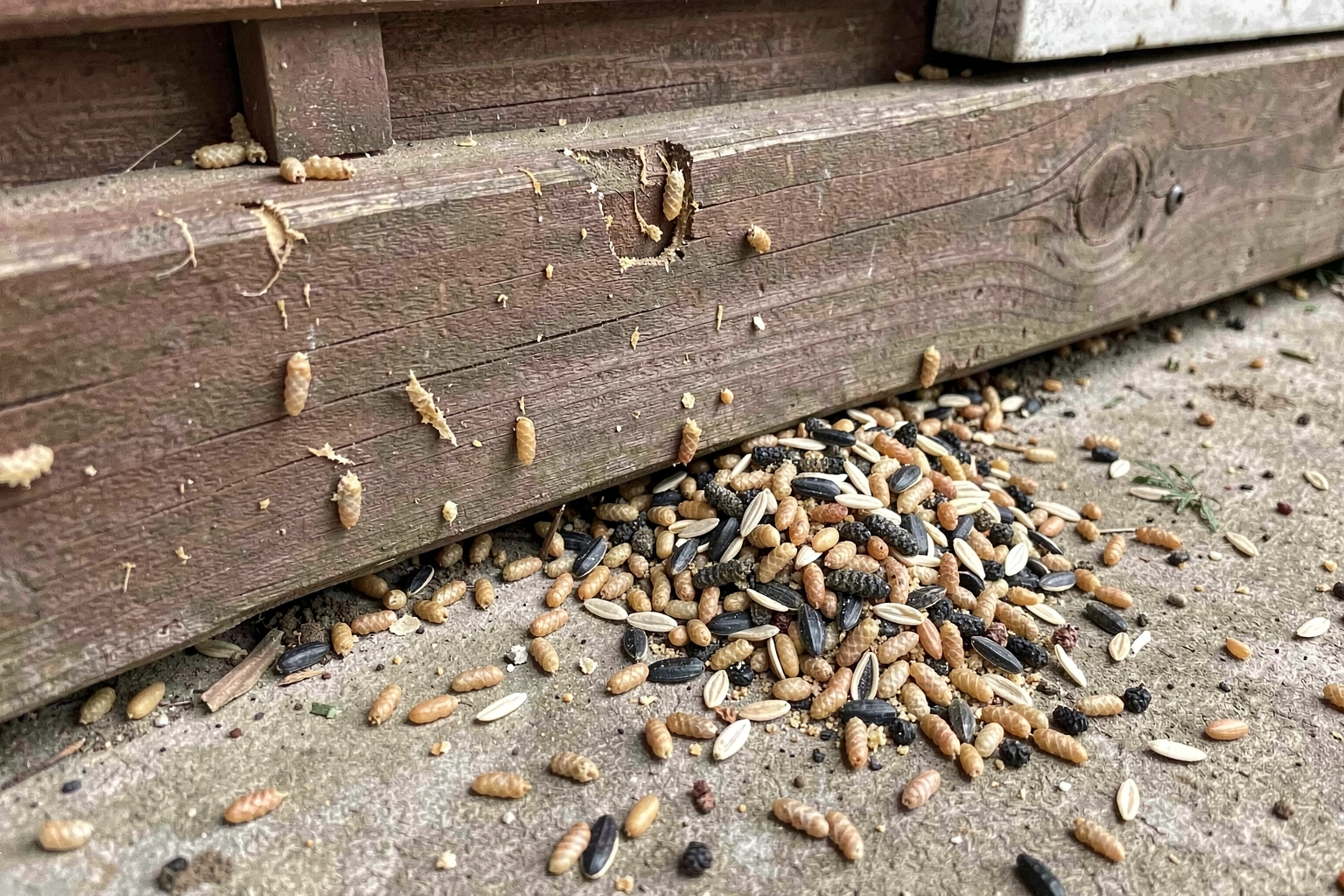
Signs that mice have already moved in
Catching a mouse problem early makes it much easier to resolve. Here is what to watch for around the feeder area and near your home.
| Sign | Where to Look | What It Means |
|---|---|---|
| Droppings (3 to 6 mm, dark, pointed ends) | Feeder base, fence lines, near storage container | Active mouse presence nearby |
| Gnaw marks | Storage container, feeder hardware, nearby wood | Mice are testing or accessing materials |
| Seed disappearing faster than birds can account for | Feeder, especially overnight | Mice feeding directly from feeder or ground |
| Runways or greasy smear marks | Along walls, fences, base of structures | Mice traveling the same paths repeatedly |
| Scratching or rustling sounds at night | Walls, attic, under floors | Mice may have entered the structure |
| Nesting material (shredded paper, insulation, fabric) | Corners of garages, sheds, storage areas | Mice nesting near the seed supply |
If you are seeing any of these signs around the feeder but not inside the home, the prevention steps above are your first move. If you are seeing signs inside the home, treat that as a separate pest-control issue that needs its own response, not just feeder adjustments.
What to do if mice are already a problem
If mice have already established themselves near your feeder or inside your home, feeder changes alone will not solve it. You need to address the existing population while also removing the food source. Start by implementing all the prevention steps above immediately, especially removing ground seed and securing storage. Then address the mice directly.
| Control Method | Where to Use | Safety Notes |
|---|---|---|
| Snap traps in covered bait stations | Outdoor feeder area, along fence lines and walls | Safe for targeted use; check and reset daily; keep birds away from trap openings |
| Snap traps along walls | Inside the home, near droppings or heard activity | Most effective indoor starting point |
| Glue traps | Not recommended outdoors | Can catch non-target animals including birds |
| Rodenticide baits | Not recommended near feeders | Serious risk to birds of prey, owls, foxes, and pets |
| Licensed pest professional | Persistent or indoor infestations | Can advise on targeted, wildlife-safe options |
For mice inside the home, also seal any entry points you find, including gaps around pipes, utility lines, and foundation cracks, using steel wool, hardware cloth, or caulk. Mice can squeeze through a gap the size of a dime, so be thorough. If the infestation is established or you are not making progress within two weeks, call a licensed pest management professional.
When to call a professional
Most feeder-related mouse problems can be resolved with the steps above. But there are situations where professional help is the right call and trying to handle it yourself just delays the solution.
- You are finding droppings or signs of mice inside the home, not just near the feeder.
- You have set traps for two weeks and are still catching mice regularly with no sign of the population declining.
- You hear persistent scratching or movement in walls, ceilings, or attic spaces.
- You find evidence of gnawing on electrical wiring, insulation, or structural materials.
- You have a large property or outbuildings where mice may be nesting in multiple locations.
A licensed pest management professional can assess the full scope of the problem, identify entry points you may have missed, and recommend targeted control methods that are safe for your household, pets, and the birds you want to keep feeding. The National Pest Management Association maintains a directory of licensed professionals if you need a starting point.
A few terms worth knowing
| Term | Definition |
|---|---|
| Baffle | A physical barrier, usually dome-shaped or cylindrical, mounted on a feeder pole or hung above a feeder to prevent squirrels and rodents from climbing up or dropping down onto the feeder |
| Seed tray | A tray or catch basin attached below a feeder that collects seed falling from the ports, keeping seed off the ground and making cleanup easier |
| Rodenticide | A chemical poison designed to kill rodents; not recommended for open outdoor use near bird feeders due to risk to non-target wildlife |
| Exclusion | The practice of sealing gaps, cracks, and entry points to prevent mice from entering a structure; considered the most effective long-term mouse-control strategy |
The bottom line
Bird seed absolutely can attract mice, and in many setups it does. But it does not have to. The combination of secure storage, a low-spill feeder with a seed tray, a pole baffle, good placement away from the house, and consistent daily cleanup removes most of what makes a feeder attractive to rodents. None of these steps are complicated or expensive, and most of them take less than an hour to implement.
Start with Day 1 of the plan above: clean up the ground seed and secure your storage. That single change removes the two biggest attractants immediately. Build from there over the week, and you will have a setup that keeps the birds happy and the mice looking elsewhere.
FAQ
Will bird seed attract mice, and what can I do today to prevent or stop it?
Yes, and you can start reducing risk in minutes. Today, remove any seed left on the ground and move seed into a locking metal or heavy plastic container; switch to a feeder design that minimizes spills and add a seed tray; relocate the feeder 10–20 feet away from the house and away from dense shrubbery; install a baffle beneath the feeder if possible; and establish a quick daily 5‑minute cleanup to clear new spills while keeping seed storage cool and dry.
What signs should I watch for and what is the first move if I see them?
Look for fresh droppings near the feeder or storage, gnaw marks on seed containers, seed disappearing faster than birds can eat, smudges or runways along walls, and nighttime noises. If you notice these, immediately restrict access to seed by sealing storage, removing ground seed, and refreshing the feeder setup. Then reduce feeding for a few days and plan a deeper cleanup.
Which seed types or packaging raise risk and what should I switch to?
blends containing millet or milo tend to spill more and invite mice; consider single‑ingredient seeds aligned with your birds and avoid flimsy paper or thin plastic packaging. If possible, use safflower or nyjer with limited ground fallout, and always keep seed in a sturdy, locking container rather than loose bags.
What are the best feeder and storage features to block access?
Opt for rodent‑resistant storage (locking metal or thick plastic), kept in a cool, dry place away from walls. Choose feeders with tight ports and add a seed tray to catch spills. A pole baffle or a cage around the feeder improves protection, and a simple, visible warning to neighbors can help remind you to maintain it.
How should I place feeders to minimize access without harming bird intake?
Put feeders well away from the house and away from dense vegetation; aim for a clear 10–20 foot buffer from structures and keep the feeding area open so you can observe activity. If space is tight, raise feeders higher and use a baffle designed for your pole setup.
What routine should I follow to keep the feeder area clean and mouse‑free?
Daily: sweep or vacuum under and around the feeder to remove new seed. Weekly: scrub the feeder and tray with a bird‑safe cleaner; monthly: inspect containers and seals for wear and reseal or replace as needed.
If I already have mice, what should I do now?
Prioritize removing the food source by eliminating ground seed and securing storage. Inspect for entry points around the home and seal gaps with steel wool or caulk. Use traps outdoors near the feeder if necessary, but keep them away from birds and pets, and consider professional help if activity persists.
When should I involve a pest professional?
Call a pro if you see indoor signs like droppings in living spaces, ongoing activity after two weeks of changes, multiple nesting spots across the property, or electrical gnawing. A professional can pinpoint entry points and offer wildlife‑safe control options.
What common mistakes should I avoid?
Don’t store seed in exposed bags or near gaps; don’t ignore ground spills; don’t rely on visually appealing but high‑spill feeders without trays; don’t use outdoor poisons near birds; and don’t delay addressing entry points when problems arise.
What is a simple one‑week plan I can follow to get started today?
Day 1: clean ground seed and secure storage; Day 2: inspect feeder for gaps and add a seed tray; Day 3: move the feeder 10–20 feet from the house; Day 4: deep clean the feeder area; Day 5: add exclusion measures like a baffle and clear nearby debris; Day 6: monitor for signs of mice and adjust feeding amounts; Day 7: establish an ongoing maintenance cadence and call a pro if signs persist.