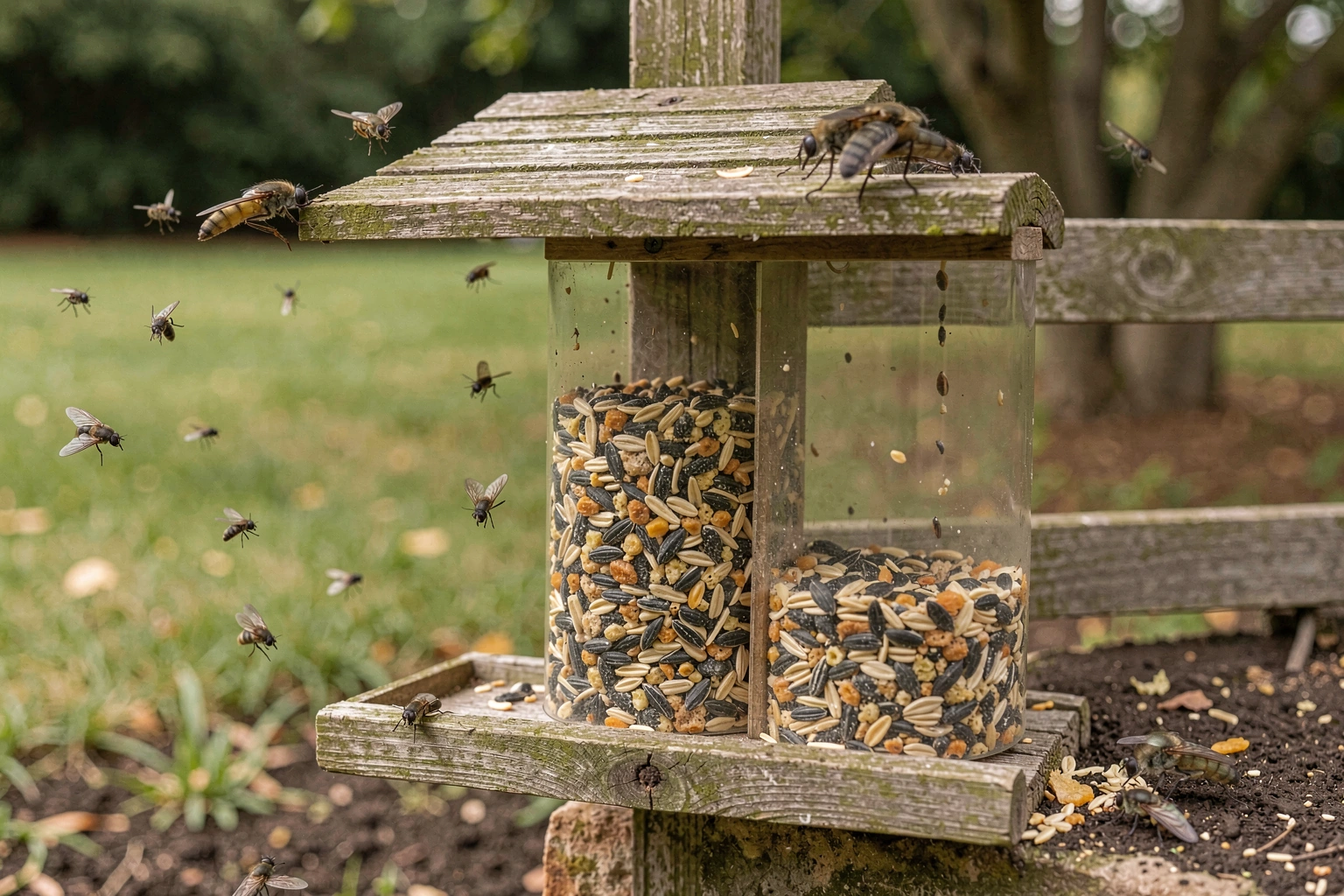
Yes, bird seed can absolutely attract flies, but the seed itself is rarely the direct culprit. The real problem is what happens to seed when it gets wet, spills on the ground, or starts to mold. Fix those conditions and the flies mostly disappear on their own.
Do this right now: Empty your feeder, toss any damp or clumped seed, wipe the feeder dry, and refill with only as much seed as your birds will eat in a day or two.
Why Flies Show Up at Your Feeder
Flies are not after the dry seed itself. They are after the fermented, moist, sugary mess that forms when seed gets wet and starts to break down. Most bird seeds contain natural oils, sugars, and starches. When moisture gets in, those compounds begin to ferment almost immediately, and that sour, yeasty smell is exactly what house flies and fruit flies are tuned to find.
Spilled seed on the ground is the biggest driver. Once seed hits soil, it absorbs moisture from the ground, starts to decompose, and becomes a fly magnet within a day or two in warm weather. A feeder sitting in direct rain without drainage has the same problem. The seed at the bottom of the port or tray gets wet, packs together, and begins to rot.
Warm, humid weather speeds everything up dramatically. In summer, damp seed can start smelling sour within 24 hours. In cooler, drier conditions, the same seed might last several days without issue. That is why fly problems at feeders tend to spike in July and August and ease off in fall.
The Conditions That Make It Worse
A few specific situations turn a minor fly nuisance into a real infestation.
Feeding too much at once is probably the most common mistake. If you fill a large tube feeder to the top and your birds only eat half of it before rain hits, the bottom half is sitting in moisture for hours. Flies find it fast. Matching the fill amount to what your birds actually consume in a day or two is one of the most effective things you can do.
Poor feeder placement makes things worse too. A feeder directly under a tree drips water onto the seed every time it rains. A feeder on a covered porch near a door or window creates a direct path for flies into your home. Feeders without drainage holes trap water in the tray and turn it into a shallow, stagnant pool of wet seed.
Old or improperly stored seed is another big factor. Seed stored in a warm garage, an open bag, or a container that lets in humidity can go stale or start to mold before it even reaches the feeder. Once you put moldy seed out, you are essentially putting out a fly buffet.
What to Do Today
You do not need to wait a week to see results. These steps will make a noticeable difference within 24 hours.
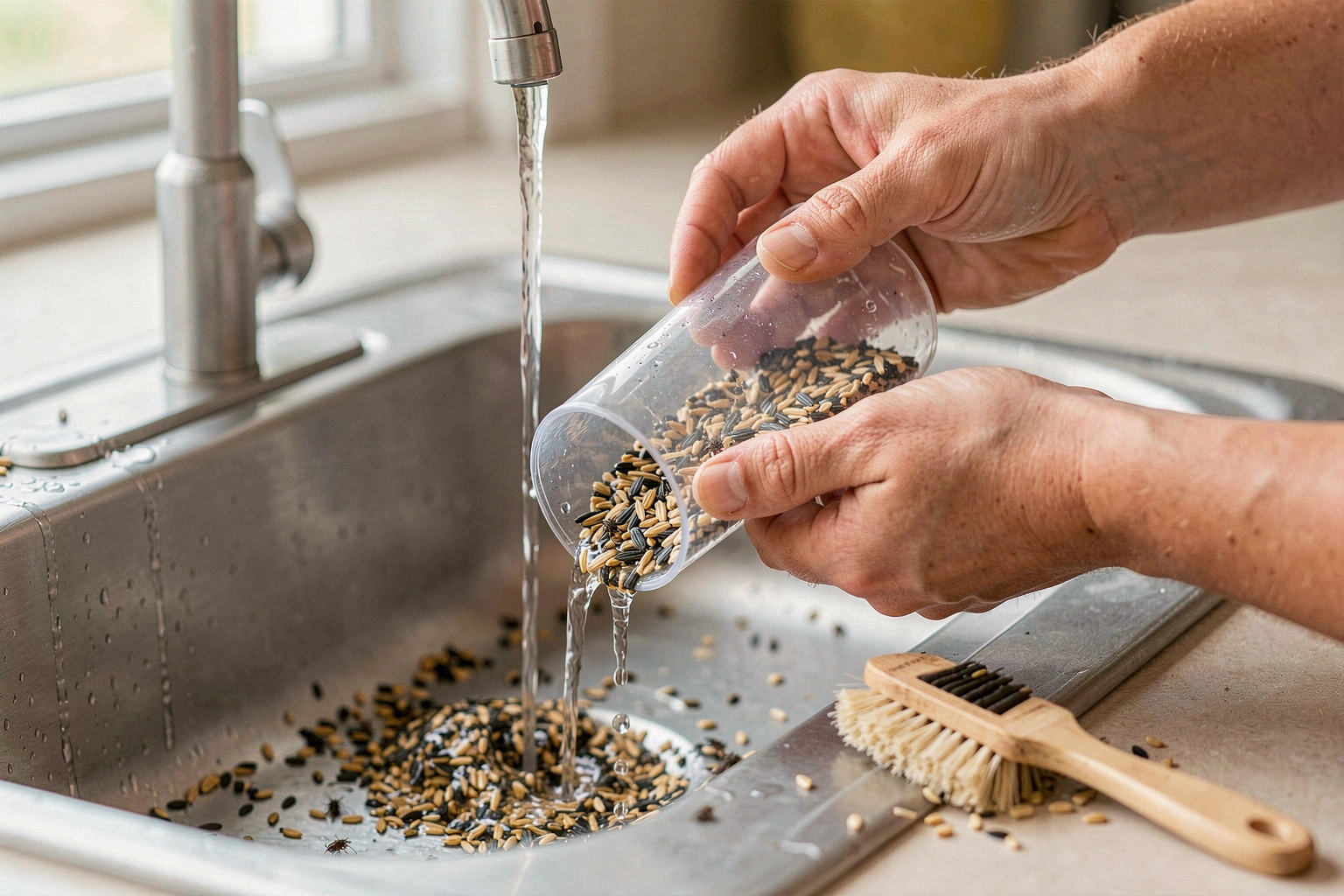
Start by removing all the seed currently in the feeder. If it smells sour, looks clumped, or feels damp, throw it away. Do not just top it off. Dump it, rinse the feeder with hot water, scrub any residue with a stiff brush, and let it dry completely before refilling. A damp feeder refilled immediately just restarts the problem.
While the feeder is drying, clean up the ground underneath it. Rake or sweep up any spilled seed, hulls, and debris. This is often the biggest fly source and the most overlooked one. If you have a seed catcher tray under the feeder, empty and rinse that too.
Refill with a smaller amount than usual. For a standard tube feeder with a few regular visitors, a cup or two of seed is plenty. Watch how quickly it gets eaten and adjust from there. The goal is to have the feeder nearly empty by the end of each day so nothing sits overnight.
If your feeder is in a spot that gets rained on directly, move it under a roof overhang, a patio cover, or add a weather dome above it. These are inexpensive and make a big difference in keeping seed dry.
Longer-Term Prevention That Actually Sticks
Once you have the immediate situation under control, a few habits will keep flies from coming back.
Store your seed in an airtight container in a cool, dry place. A sealed plastic bin or a metal trash can with a tight lid works well. Avoid storing seed in a hot garage or shed where temperatures swing dramatically, because heat and humidity shorten shelf life fast. Most common bird seeds (sunflower, safflower, millet) stay fresh for about six months under proper storage conditions. If your seed smells musty or looks oily and clumped, it has gone bad and should be discarded.
Do a quick daily check of the feeder and the ground below it. This takes about 60 seconds. Look for spilled seed, wet clumps, or any sign of mold. Sweep up spills immediately. This one habit prevents most fly problems before they start.
Once a week, do a more thorough cleaning. Remove remaining seed, rinse the feeder with a diluted white vinegar solution (one part vinegar to nine parts water works well), scrub with a brush, rinse clean, and let it air dry completely before refilling. Once a month, do a deeper inspection of the feeder hardware, drainage holes, and any seed storage containers for signs of moisture, mold, or pest activity.
If you live somewhere with heavy summer humidity or frequent rain, consider switching to a feeder with a built-in weather guard or a covered hopper design that keeps seed protected from above. Tube feeders with drainage holes at the bottom of each port are also much better than solid-bottomed designs in wet climates.
Feeder Designs That Help
Not all feeders are equal when it comes to moisture control, and the design really does matter.
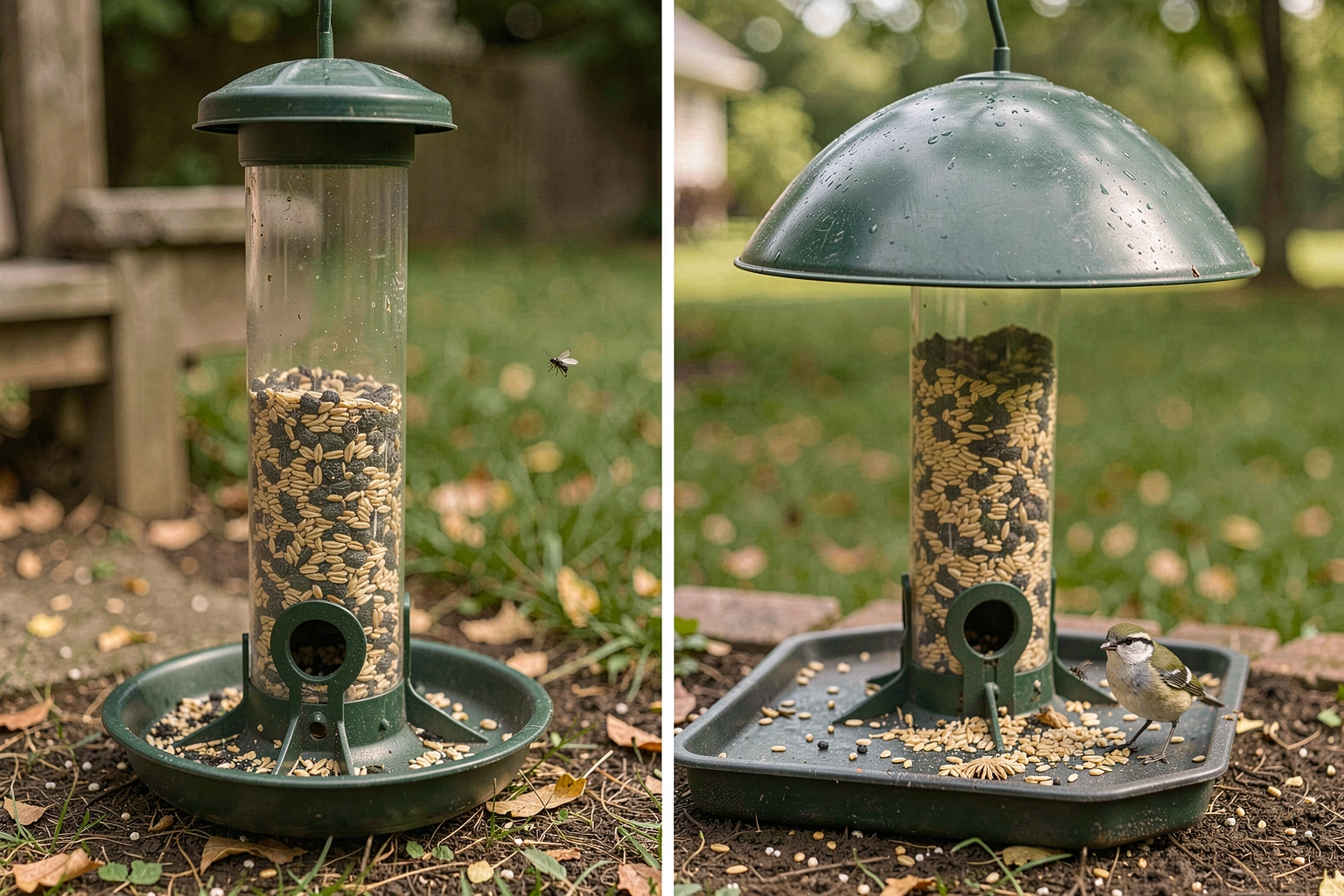
Tube feeders with small ports and drainage holes at the bottom are generally the best choice for wet climates. They limit how much seed is exposed at once and let water drain out rather than pool. Hopper feeders with a covered roof keep seed dry but can trap moisture in the base if they lack drainage, so check for drainage holes before buying.
Platform or tray feeders are the most fly-prone design because they expose all the seed to rain and birds tend to scatter seed across the surface. If you like tray feeders, look for mesh-bottom versions that allow water to drain through, and plan to clean them daily in warm weather.
A seed catcher tray mounted below the feeder is useful for reducing ground spills, but it needs to be emptied and rinsed every day or two. A full, wet seed catcher is just as attractive to flies as spilled seed on the ground.
Weather domes or baffles mounted above the feeder are one of the most cost-effective upgrades you can make. They block rain from falling directly into the feeder and can reduce moisture-related problems significantly.
Signs the Problem Is Getting Bigger
Flies alone are annoying but manageable. A few other signs mean you are dealing with something more serious.
If you see visible mold on the seed (fuzzy gray, green, or black growth), a sour or musty smell coming from the feeder, or seed that looks dark and sticky, stop feeding immediately. Moldy seed can produce aflatoxins, which are toxic to birds and can cause illness or death. Do not just remove the moldy seed and refill. Scrub the entire feeder thoroughly, discard all seed that was stored with the moldy batch, and inspect your storage container for moisture.
If you notice small larvae or worms in the seed, that is a sign of a moth or weevil infestation in your stored seed supply, not just a feeder problem. Discard all affected seed, clean and dry the storage container, and start fresh with a sealed airtight bin.
An increase in ants or wasps at the feeder alongside flies often means there is a significant amount of decomposing seed somewhere nearby, either in the feeder, in a catcher tray, or on the ground. Do a thorough sweep of the entire feeding area.
If birds suddenly stop visiting a feeder they were using regularly, that is often a sign the seed has gone bad. Birds have a good sense of smell and will avoid rancid or moldy seed.
A Note on Safety
Never use chemical pesticides or fly sprays near a bird feeder. The residue can contaminate seed and harm birds directly. Sticky fly traps placed several feet away from the feeder can help reduce the overall fly population in the area without posing a risk to birds, but they are not a substitute for fixing the underlying moisture and sanitation issues.
When handling moldy seed, wear gloves and avoid breathing in the dust. Aflatoxins are a real health concern for humans too, especially with prolonged exposure. Dispose of moldy seed in a sealed bag in the trash rather than composting it.
Your 7-Day Maintenance Plan
Here is a simple week-one plan to get the situation under control and build the habits that prevent it from coming back.
| Day | What to do |
|---|---|
| Day 1 | Empty feeder, discard damp or old seed, scrub and dry feeder completely, clean up all ground spills, refill with a small amount of fresh seed |
| Day 2 | Check feeder and ground for spills, sweep up any hulls or scattered seed, confirm feeder is draining properly |
| Day 3 | Quick visual check: look for clumping, moisture, or mold; adjust fill amount if seed is not being eaten fast enough |
| Day 4 | Inspect seed storage container for moisture or pests; confirm lid seals tightly |
| Day 5 | Sweep ground under feeder, empty and rinse seed catcher tray if you have one |
| Day 6 | Do a light weekly clean: rinse feeder with diluted vinegar solution, scrub, rinse, dry before refilling |
| Day 7 | Assess: are flies reduced? If yes, keep the routine going. If flies persist, check for a hidden spill source or consider moving the feeder to a drier location |
After the first week, the daily check takes about a minute and the weekly clean takes maybe ten. That is genuinely all it takes to keep flies from becoming a recurring problem.
When to Call in Help
Most fly problems at bird feeders are fully solvable with the steps above. But if you have cleaned everything thoroughly, fixed the moisture issues, and flies are still swarming after a week or two, it is worth looking beyond the feeder itself.
Check whether there is a larger organic waste source nearby, like a compost bin, a trash can without a lid, or standing water in a planter or gutter. Flies do not stay in one spot if there is a better food source nearby, and they will keep returning to your yard as long as that source exists.
If you are seeing flies inside your home and suspect they are coming in from the feeder area, move the feeder at least ten feet away from any doors or windows and see if that helps. A feeder right next to a screen door is an easy entry point.
For persistent, large-scale infestations that do not respond to sanitation, a pest control professional can identify whether there is a breeding site you have missed and recommend targeted, bird-safe options. This is rarely necessary for a typical backyard feeder situation, but it is the right call if the problem has been going on for weeks despite doing everything correctly.